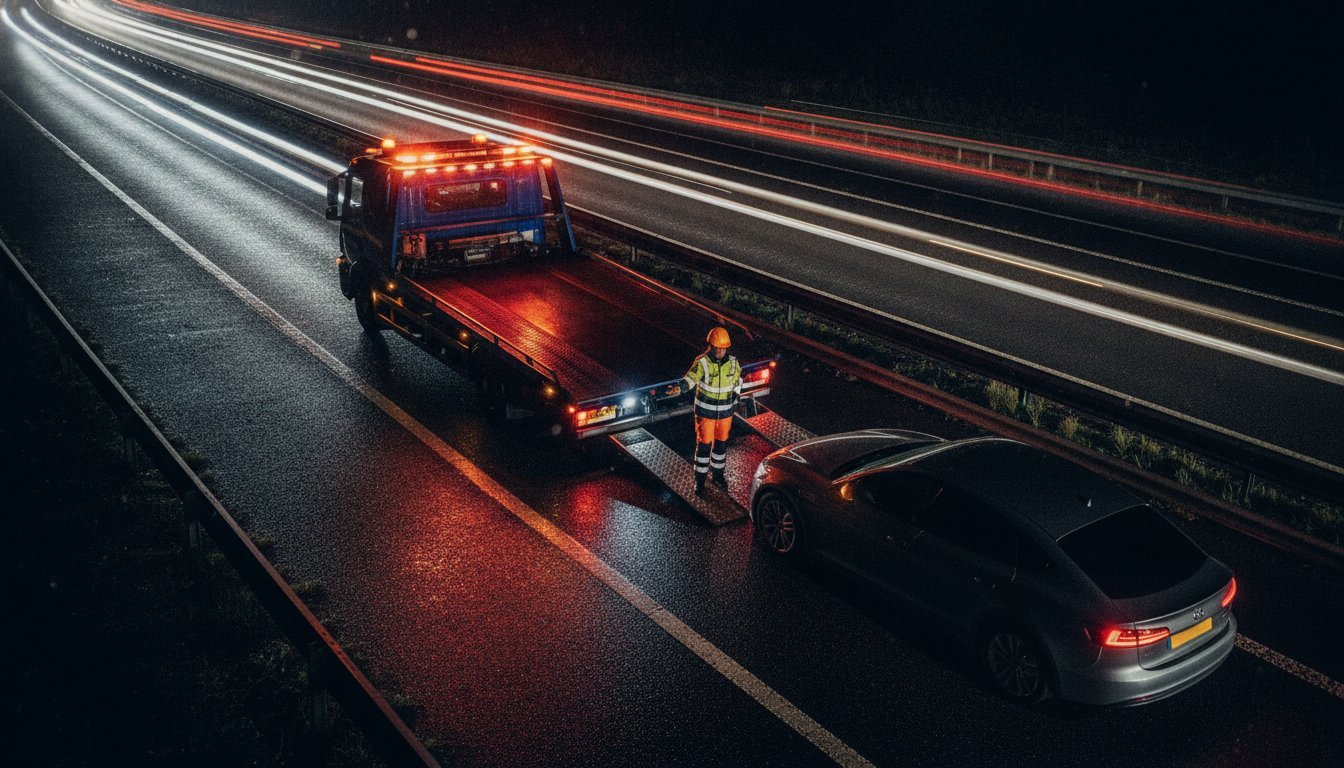
You’re parked on a narrow hard shoulder with the rain lashing against your windscreen, wondering if the recovery bill will be more painful than the mechanical failure itself. It’s a high-stakes moment that millions of British drivers face every year. You need a straight answer to a vital question: how much does car recovery cost UK? The total isn’t just a random number. It’s a professional calculation based on your location, the time of day, and the specific technical requirements of your vehicle.
We know that the anxiety of hidden motorway surcharges or confusing national rates can make a bad situation feel even worse. You deserve a transparent breakdown of what you’re paying for. This guide explains the key factors that determine recovery fees in 2026, from standard call-out charges to the specialist needs of electric vehicles and larger vans. We’ll show you how to avoid unnecessary costs and how to secure a fair, instant quote. By the end of this article, you’ll have a clear roadmap to getting back on the move without the financial guesswork. Our goal is to replace your stress with a simple, reliable plan of action.
Key Takeaways
- Understand the breakdown of a professional call-out fee to accurately assess how much does car recovery cost UK based on your specific vehicle type and location.
- Identify how the time of day and location, such as motorway hard shoulders versus rural lanes, significantly influence the final recovery rate.
- Learn why specialist equipment like flatbed towing is essential for the safe transport of electric vehicles and larger vans to prevent mechanical damage.
- Evaluate the financial difference between annual breakdown cover and the potential surcharges associated with one-off emergency roadside assistance.
- Discover how to manage additional expenses like secure vehicle storage and ensure you receive a transparent, fair quote without hidden surcharges.
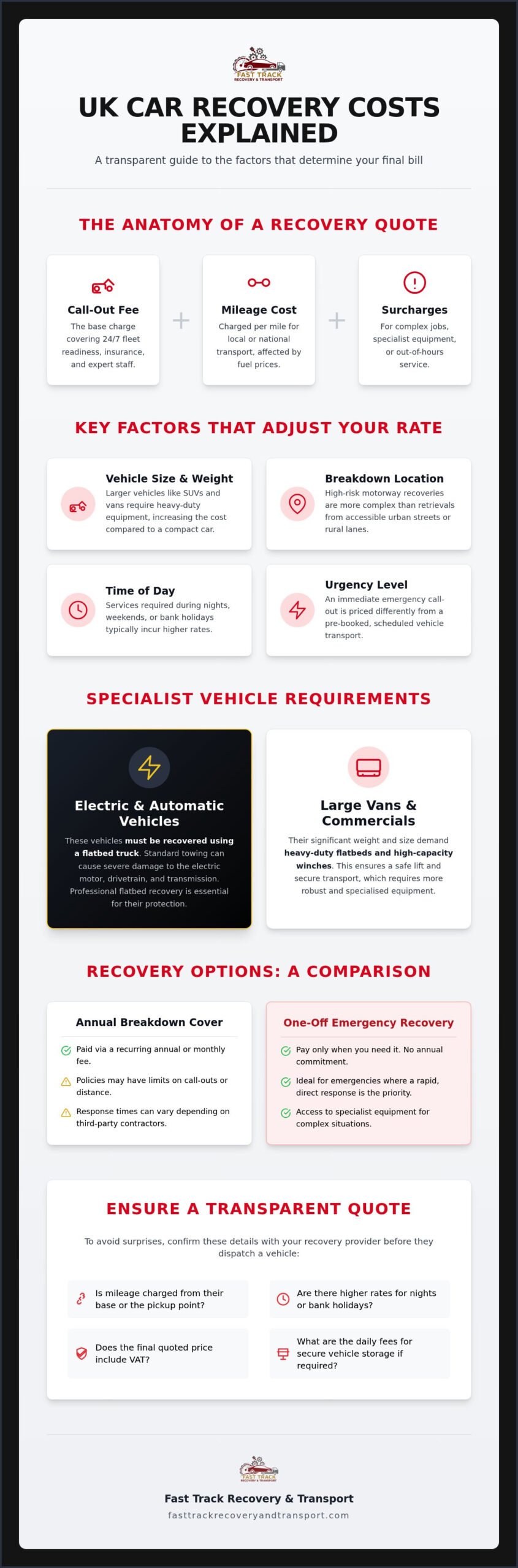
Understanding the Fundamental Components of UK Car Recovery Costs
Professional Vehicle recovery is more than just moving a car from one location to another. It’s a precise logistical operation. When drivers ask how much does car recovery cost UK, they’re often looking for a single, flat figure. In reality, the final bill is a combination of several distinct components. Understanding these parts helps you see exactly what you’re paying for. It also highlights why professional services are necessary for road safety and vehicle protection. Every recovery mission is a balance of technical skill, specialized equipment, and rapid response.
The Call-Out Fee: What Does it Actually Cover?
The call-out fee serves as the fundamental base of your quote. This isn’t just a charge for the driver to start the engine. It covers the substantial overheads of maintaining a 24/7 rapid-response fleet. Specialist recovery vehicles are expensive to insure, maintain, and equip. When you call for help, you’re paying for the immediate availability of these assets. Beyond the hardware, the fee supports the training of expert staff who manage high-pressure roadside situations with calm efficiency.
Emergency motorway call-outs often differ from pre-booked transport. On a motorway, the logistical risks are significantly higher. The equipment needed to safely secure a car whilst traffic passes at high speeds is highly specialised. Choosing a provider with professional car towing expertise ensures that these safety protocols are strictly followed. This protects both your vehicle and other road users from further harm during the recovery process.
Mileage Calculations: Base to Pickup and Destination
Once your vehicle is secured on the flatbed, the mileage rate applies. It’s vital to clarify how a provider calculates this distance before they arrive. Some companies charge from the moment the recovery truck leaves its base centre. Others only begin the meter from the pickup point to your chosen destination. This distinction can make a noticeable difference to the final invoice, especially for longer journeys. When calculating how much does car recovery cost UK, always confirm which mileage model is being used.
- Local Recovery: This typically covers shorter distances, often within a 10 to 20-mile radius of the recovery hub. It’s the most common solution for home breakdowns or local garage drops.
- National Vehicle Transport: This involves long-distance hauling across the UK. It requires specific fuel planning, driver hour management, and often different vehicle configurations.
Industry rates for mileage are not static. They often fluctuate based on national fuel price changes. If diesel costs at the pump rise, you’ll likely see a corresponding adjustment in the per-mile rate. Always ask if the quote includes the return journey of the recovery vehicle or just the loaded miles to avoid surprises.
The “Total Incident Cost” brings all these factors together. It’s the sum of the call-out fee, the total mileage, and any potential surcharges for complex recovery or secure storage. By viewing these as separate components, you can better understand the technical complexity involved in every rescue mission. This transparency ensures you get a fair price for a professional, safe service.
Variables that Impact the Standard Call-Out Rate
Why does one recovery mission cost more than another? It usually comes down to the resources required for your specific situation. Recovering a heavy van or a large SUV isn’t the same as loading a compact city car. Heavier vehicles require robust flatbeds and higher-rated winches to ensure a safe lift. This technical necessity increases the base resources used for the job. When you’re assessing how much does car recovery cost UK, the physical weight and dimensions of your vehicle are the first variables we consider. Larger vehicles simply demand more specialised equipment and more fuel to transport.
The “Urgency Factor” also plays a critical role in the service level you receive. Do you need a truck on-site within the hour, or can you wait for a scheduled slot? Rapid response requires dispatchers to reroute the nearest available unit immediately. This level of service prioritises your safety and minimises your time spent stranded on the roadside. It reflects a commitment to immediate resolution rather than logistical convenience. For a clear view of your potential expenses, you can request a transparent quote that accounts for your specific vehicle and current location.
The Impact of Timing: Out-of-Hours and Emergency Response
Maintaining a 24/7 fleet for unscheduled emergencies involves significant logistical challenges. Staffing recovery centres through the night and over weekends requires a dedicated team ready to move at a moment’s notice. Because of these overheads, the industry typically applies premiums for out-of-hours work:
- Night and Weekend Rates: Services requested after 6 pm or during the weekend often see a surcharge of 30% to 50%.
- Bank Holidays: During national holidays, costs can increase by 50% to 100% due to limited staff availability and higher demand.
- Extreme Weather: Snow, ice, or flooding events can stretch industry-wide availability, sometimes influencing the standard response rate.
If your situation isn’t an emergency, such as an MOT drop-off or an auction collection, try to book during standard business hours. Pre-booking allows for a more predictable schedule and often results in more competitive pricing.
Geographic Challenges: Motorways, Rural Roads, and Low-Access Areas
Where you’re stranded is just as important as what you’re driving. Motorways are high-risk environments that require strict safety protocols. Recovering a vehicle from a hard shoulder involves additional lighting, specific approach patterns, and occasionally secondary safety vehicles to shield the scene. These requirements naturally increase the operational cost compared to a quiet residential street. Safety is the priority, and the equipment used must reflect that risk.
Rural roads present a different set of obstacles. Narrow lanes and low-hanging trees might require smaller, more agile recovery trucks rather than a standard large flatbed. You might also encounter “dead mileage” charges if you’re in a remote area. This covers the distance the recovery vehicle must travel from its base to reach you before the actual transport begins. By providing an accurate location, you help the recovery team dispatch the right vehicle the first time, avoiding delays and extra costs.
Specialist Equipment and Complex Recovery Surcharges
Not every recovery is a simple “load and go” from the side of a flat road. When your vehicle is stuck in a steep ditch, bogged down in mud, or involved in a collision, the technical complexity of the job spikes. This is where specialist equipment becomes essential. If you’re wondering how much does car recovery cost UK, you must account for these extra layers of difficulty. These aren’t arbitrary surcharges. They represent the specialised machinery and expert labour required to retrieve a vehicle without causing further structural damage. Every complex recovery is a precision operation designed to protect your asset.
Winch Recovery and Off-Road Extraction
Extracting a car from a field or a deep embankment requires significant technical skill. It isn’t as simple as pulling a cable. Recovery specialists use heavy-duty winches, snatch blocks, and ground anchors to manage the physics of the pull. This ensures the frame of your vehicle isn’t twisted or compromised during the process. Because this work is unpredictable and labour-intensive, many providers bill the extraction phase at an hourly rate. This covers the time spent on-site setting up safety zones and carefully winching the vehicle back to a position where it can be loaded safely.
Electric Vehicles (EV) and Heavy Goods Vehicles (HGV)
The rise of electric cars has fundamentally changed the recovery landscape. For most EVs, flatbed towing is a non-negotiable requirement. Towing an EV with its wheels on the road can generate electricity in the motors, leading to catastrophic drivetrain failure or even fire. This means a standard tow bar is rarely an option. You need a dedicated flatbed vehicle that can carry the entire weight of the car.
Similarly, recovering HGVs, lorries, or buses is a massive undertaking. It requires high-capacity lifting gear and crews trained in heavy-vehicle logistics. The scale of the equipment alone is significantly larger than what is used for a standard hatchback. When you request a quote, always mention the exact weight and power type of your vehicle. This ensures the right truck is dispatched immediately. It prevents costly delays or the need for a second, larger vehicle to be sent out after the first one arrives.
Finally, accident recovery carries its own set of technical costs. Beyond just moving the car, specialists often have to manage road hazards. This includes clearing debris, managing fluid leaks, and coordinating with emergency services to secure the area. These tasks require additional time and safety equipment. It’s a professional service that prioritises public safety whilst ensuring your vehicle is transported to a secure location for an insurance assessment.
Financial Comparison: Breakdown Cover vs. One-Off Recovery
Choosing between an annual subscription and a one-off service is a common dilemma for British motorists. Many drivers assume that a membership is the only way to avoid high costs. However, the true value of cover depends entirely on your vehicle’s reliability and your annual mileage. When calculating how much does car recovery cost UK, it’s essential to weigh the total cost of years of unused membership against a single, professional call-out fee. For those who maintain their vehicles well or drive infrequently, the pay-on-use model often proves more economical over the long term.
The Reality of “On-the-Spot” Breakdown Membership
If you break down without cover, you might be tempted to join a national provider right there on the hard shoulder. Be cautious. This “instant membership” often comes with heavy admin fees and immediate surcharges that can exceed the price of a standard recovery. You’re essentially paying a premium for your lack of preparation. It’s also a misconception that membership covers everything. Many standard policies exclude technical tasks like winching or off-road extraction, which were covered in previous sections. Before you sign up in a panic, check your existing bank accounts or insurance policies. Many UK accounts include breakdown cover as a standard perk, which could save you from paying twice for the same protection.
When Pay-on-Use Recovery Offers Better Value
Pay-on-use recovery offers a level of transparency and speed that large clubs often struggle to match. When you call a local specialist, you speak directly to the person dispatching the truck. There are no call centres or long automated queues. This direct communication leads to faster response times and more accurate arrival estimates. It’s particularly valuable for specific tasks that memberships won’t cover, such as transporting a vehicle for an MOT or collecting a car from an auction.
Think about the break-even point. If you pay for a premium national membership for five years without ever needing a tow, you’ve spent a significant sum for “just in case” protection. A single one-off fee for professional recovery might be considerably less than those five years of cumulative premiums. This flexibility allows you to keep your money in your pocket until the moment you actually need help. For immediate assistance without the membership markup, you can get an instant recovery quote tailored to your exact situation. This approach ensures you only pay for the service you use, providing professional results without the ongoing subscription burden.
Managing Costs During Vehicle Storage and Transport
The logistical process often extends beyond the initial roadside rescue. If a breakdown occurs during the night or over a bank holiday weekend, your chosen repair centre will likely be closed for business. In these instances, secure vehicle storage becomes a necessary bridge between the recovery and the final repair. It provides a monitored environment for your car whilst insurance assessments are pending or workshop space becomes available. When calculating how much does car recovery cost UK, it is vital to account for these potential secondary phases. To secure the best value, look for providers who can bundle recovery, storage, and secondary transport into a single package. This integrated approach eliminates multiple call-out fees and ensures the entire incident is managed under one transparent invoice.
Secure Vehicle Storage: Rates and Protection
Professional storage is a specialised service that prioritises the safety of your asset. A secure facility should offer 24/7 CCTV monitoring, gated access, and comprehensive insurance coverage for vehicles on the premises. These fees are almost always calculated on a 24-hour basis. To minimise the duration of the stay, maintain proactive communication with your insurance provider or garage to confirm exactly when they can receive the vehicle. Before your car enters a storage facility, follow this checklist to avoid the need for costly return trips:
- Retrieve all essential personal items, including house keys, work permits, and physical insurance documents.
- Clear the vehicle of high-value electronics, dash cams, and loose charging cables.
- Take high-resolution photographs of the vehicle’s condition at the point of entry for your records.
- Confirm the specific daily rate and any administrative fees for releasing the vehicle to a secondary transporter.
How to Request an Accurate and Transparent Quote
To avoid the “hidden surcharge” trap, you must provide the recovery team with precise data. Vague descriptions often result in a loose estimate rather than a fixed quote. A professional fixed quote is a firm financial commitment based on the specific logistical challenges of your situation. When you call for assistance, have the following information ready to ensure total clarity on how much does car recovery cost UK for your specific incident:
- Full Vehicle Specs: Identify the make, model, and drivetrain type (noting if it is an EV or a heavy van).
- Exact GPS Location: Use a digital location app or a specific postcode to pinpoint your position for the recovery unit.
- Current Vehicle Condition: Note if the wheels are locked, if there is steering damage, or if the vehicle is off-road.
- Final Destination: Provide the full address of the home or garage where the vehicle will eventually be delivered.
For immediate assistance and a clear, no-nonsense price, use the Fast Track Recovery & Transport instant quote service. This system provides professional clarity in high-stress moments, ensuring you only pay a fair rate for the specific services you require. By choosing a dependable expert, you ensure that the path from the roadside to the repair centre remains simple, safe, and financially predictable.
Secure Reliable Recovery Without Hidden Surcharges
Understanding the technical and logistical variables of roadside assistance is the first step toward avoiding unnecessary expenses. We have explored how call-out fees, mileage rates, and the timing of your request influence the final bill. Whether you are dealing with a standard car, a heavy van, or a modern electric vehicle, the complexity of the task dictates the resources needed. By knowing exactly how much does car recovery cost UK, you can make informed decisions rather than reactive choices in a moment of crisis.
Our team is ready with a 24/7 emergency response and specialist EV and HGV equipment to handle any situation with professional care. Don’t leave your vehicle’s safety to chance. Get an Instant Quote for Professional Car Recovery today and receive a transparent, no-obligation quote tailored to your specific needs. You can move forward with the steady confidence that your vehicle is in expert hands and your journey is back on track.
Frequently Asked Questions
How much does car recovery cost per mile in the UK?
Mileage rates are typically added to a base call-out fee to cover the fuel and wear of the recovery vehicle. When calculating how much does car recovery cost UK, you’ll find that rates often fluctuate based on national fuel price changes. Some providers charge for the return journey to their base, whilst others only bill for the loaded miles. Always confirm the specific mileage model before the truck is dispatched to your location.
Is car recovery more expensive on a motorway?
Motorway recovery carries a premium because of the high-risk environment and strict safety regulations. Specialists must use additional lighting and specific approach techniques to secure the scene on a hard shoulder. These operations often require larger safety vehicles to protect both the driver and the stranded motorist. Because of the increased technical complexity and logistical risk, motorway call-outs are consistently priced higher than standard recoveries on urban roads.
Will my breakdown cover pay for winch recovery if I am stuck in mud?
Standard breakdown memberships frequently exclude off-road extractions or vehicles bogged down in mud. These situations require specialist Winch & Recovery services, which involve specialised gear like heavy-duty cables and snatch blocks. If your vehicle is off the tarmac, you’ll likely face a surcharge for the technical skill required for a safe extraction. It’s essential to describe your vehicle’s exact position when calling to ensure the right equipment is sent.
Can I get a car towed without having breakdown cover?
You can absolutely arrange a tow without a membership by using a professional pay-on-use service. This approach allows you to hire a recovery specialist for a one-off fee rather than paying an annual subscription. It’s a practical choice for drivers with reliable vehicles or those who only need transport for specific tasks like auction collections. You simply pay for the help you need when you need it, avoiding long-term commitments.
What are the additional charges for recovering an electric vehicle?
Recovering an electric vehicle (EV) requires specific equipment, primarily a flatbed transporter. You cannot use a traditional tow bar, as moving the wheels on the road can cause catastrophic damage to the electric motors. This technical requirement means EV recovery involves a dedicated vehicle and a crew trained in high-voltage safety. When asking how much does car recovery cost UK for an EV, expect the specialised equipment needs to be reflected in the final quote.
How much does it cost to store a car after an accident?
Vehicle storage fees are typically calculated on a 24-hour basis at a secure, monitored facility. These costs cover the use of gated premises that protect your car whilst it awaits an insurance inspection or a garage opening. The daily rate depends on the level of security provided, such as CCTV and physical barriers. To keep these costs manageable, it’s vital to coordinate with your repair centre or insurer to move the vehicle as quickly as possible.
Are there extra fees for recovering a van or HGV compared to a car?
Recovering vans, HGVs, or buses involves higher costs than a standard car. These larger vehicles require high-capacity flatbeds and heavy-duty lifting gear. The recovery crew must also have specific training to manage the weight and scale of commercial vehicles safely. Because of the increased fuel consumption and the specialised nature of the equipment, HGV and van recovery always carries a higher base rate and mileage charge compared to light passenger vehicles.
Does the time of day affect the cost of vehicle recovery?
The time of day is a major factor in the final cost of recovery. Most providers operate a 24/7 service, but staffing a fleet during unscheduled hours involves higher overheads. Requests made after 6 pm, during weekends, or on bank holidays typically incur a surcharge. These premiums reflect the cost of maintaining rapid-response readiness when standard businesses are closed. For non-emergency tasks, booking during regular business hours can help you avoid these fees.