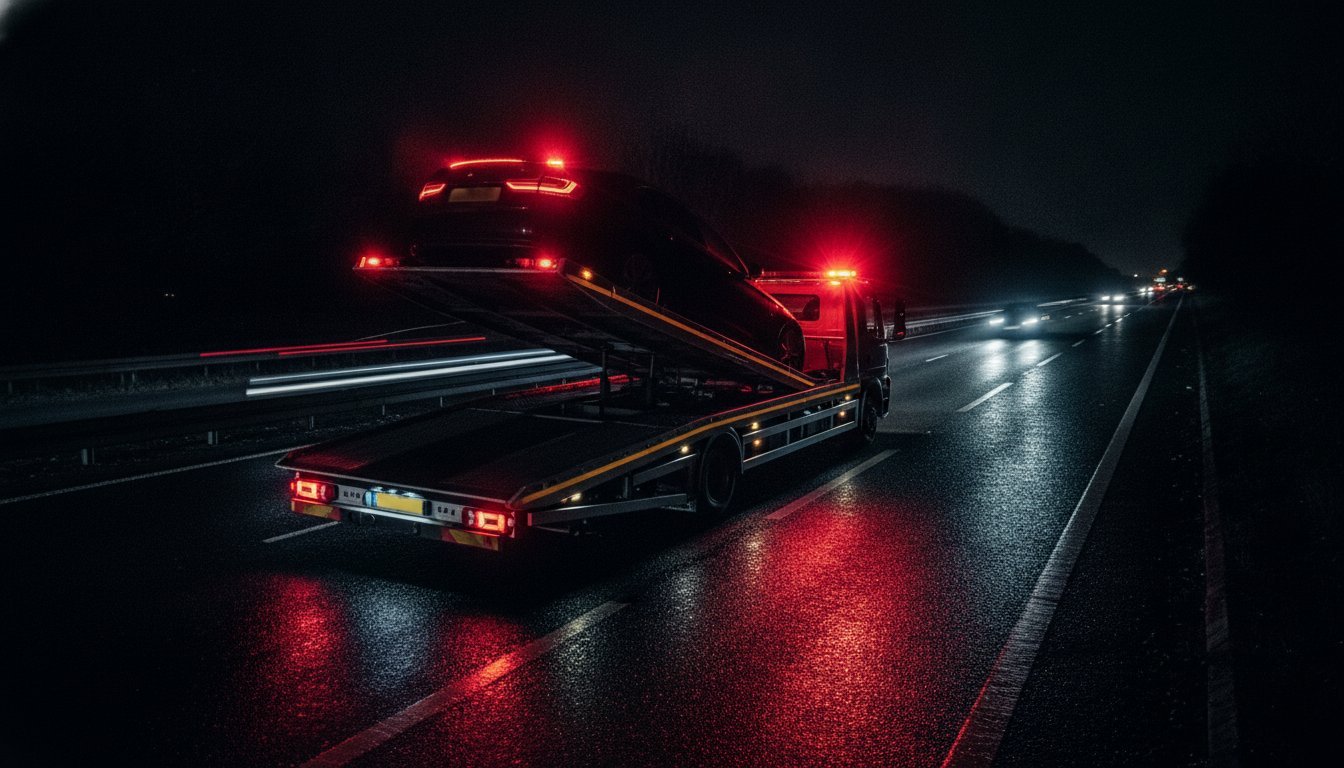
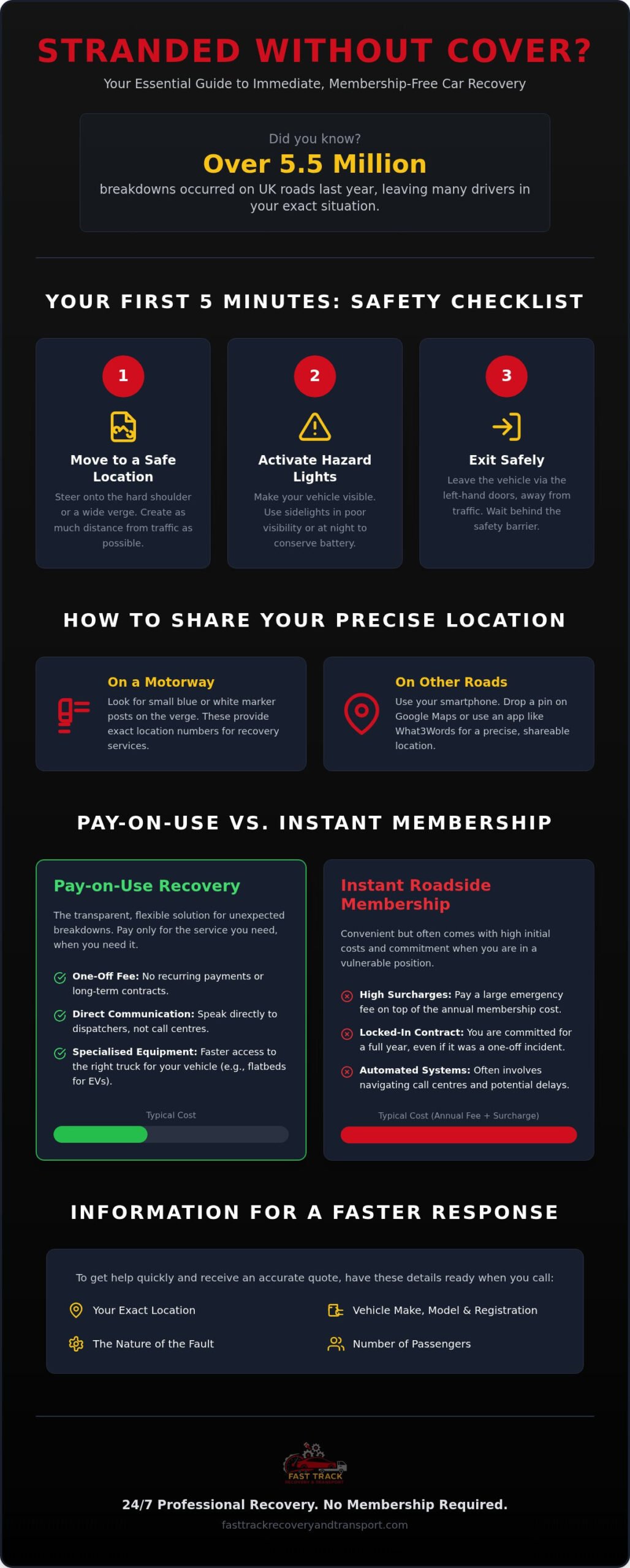
Did you know that over 5.5 million breakdowns occurred on UK roads last year, leaving thousands of drivers exactly where you are right now? It is a daunting figure, especially when you realise your dashboard is glowing and you don’t have a membership card in your wallet. If you are currently searching for car recovery without breakdown cover, the stress of being stranded is likely matched only by the fear of being exploited by emergency call-out fees.
We understand that feeling of vulnerability, especially if you’re stuck on a dangerous stretch of road or managing a complex vehicle like an EV or a large van. You might think your only option is to join a major club at a premium, but that’s simply not the case. This guide will show you how to secure immediate, professional assistance and get your vehicle to a safe location or a garage right now. We’ll break down the transparent world of pay-on-use recovery, explain how to access 24/7 help without a policy, and ensure you get the expert handling your specific vehicle deserves. You can get back to safety without the long-term commitment.
Key Takeaways
- Prioritise your safety by moving your vehicle to the hard shoulder or a safe verge and activating hazard lights immediately.
- Compare the benefits of transparent, one-off pay-on-use fees against the high surcharges of purchasing an instant membership at the roadside.
- Secure reliable car recovery without breakdown cover by providing your exact location and vehicle fault details for a faster response.
- Access specialised equipment like flatbed trailers for EVs and prestige cars through 24/7 national services that do not require a subscription.
- Understand how mileage and vehicle size influence your final quote to ensure you receive a fair, professional recovery service.
Immediate Steps: What to Do When You Break Down Without Cover
Breaking down is an immediate shock to the system. If you find yourself needing car recovery without breakdown cover, your priority must shift instantly from your schedule to your safety. Do not panic. Steer your vehicle as far to the left as possible. If you are on a motorway, aim for the hard shoulder or a designated emergency area. On A-roads or dual carriageways, look for a wide verge or a safe lay-by. The goal is to create as much distance as possible between your vehicle and the live flow of traffic.
Once you are stationary, activate your hazard warning lights immediately. If it is dark, or if visibility is poor due to rain or fog, switch on your sidelights as well. This ensures other motorists can spot you from a distance. Exit the vehicle only through the left-hand passenger doors to stay clear of the road. Climb over the safety barrier and wait on the embankment or a safe verge well away from the carriageway. Keep your pets in the car for their own safety unless there is an immediate risk of fire or collision.
The Importance of Visibility and Safety
Put on a high-visibility vest if you have one in your emergency kit. It is a simple tool that significantly increases your presence to passing drivers. Whilst you wait for help, keep your front wheels turned away from the road. This ensures that if another vehicle strikes your stationary car, it is pushed into the verge rather than into the path of oncoming traffic. Never attempt even basic repairs, such as changing a tyre, on a busy motorway or dual carriageway. Professional Roadside assistance providers use specialised equipment and lighting to manage these high-risk environments safely.
Identifying Your Location for Recovery Services
To get help quickly, you must be precise about your location. If you are on a motorway, look for the small blue or white marker posts at the side of the road. These posts provide specific numbers that tell a dispatcher exactly which road you are on and how far you are from the start of the motorway. This is often more reliable than a GPS signal in remote areas.
If you aren’t on a motorway, use your smartphone to find your coordinates. Apps like What3Words provide a unique three-word address for your exact location, which recovery teams can use to find you within a few metres. Alternatively, drop a pin on Google Maps or note the nearest junction, landmark, or local business. Providing these details ensures your car recovery without breakdown cover is handled efficiently, getting a driver to your exact position without unnecessary delays.
Pay-on-Use vs. Instant Membership: Comparing Your Recovery Options
When you are stranded, the immediate priority is following the steps to take when you break down to ensure your safety. Once you’re secure, you have to decide how to pay for your rescue. Most drivers assume they must join a national club to get help, but car recovery without breakdown cover is often more cost-effective through a pay-on-use model. This approach involves a one-off fee for the specific incident. You aren’t tied into a contract, and you don’t have to worry about recurring monthly direct debits for a service you might not use again for years.
In contrast, “instant membership” allows you to join a major breakdown club at the roadside. While this sounds convenient, it almost always includes a significant emergency surcharge on top of the annual membership fee. You are essentially paying a premium for your lack of preparation. For many motorists, the total cost of joining a club under duress far exceeds the price of a single, professional recovery. If you want a straightforward solution without the paperwork, choosing professional per-incident recovery is usually the faster path to relief.
The Benefits of Independent Recovery
Independent recovery specialists operate with a level of flexibility that large corporations often struggle to match. When you call an independent, you usually speak directly with the dispatcher or the driver. This direct communication eliminates the frustration of navigating automated call centres. It also ensures that the person arriving at your location understands the specific needs of your vehicle. Whether you’re driving a lowered sports car that requires a specialised flatbed or a large van that needs heavy-duty towing, an independent operator can dispatch the right equipment immediately.
When to Choose Instant Membership
Instant membership might be a viable option if you are a frequent long-distance traveller who anticipates needing multiple call-outs over the next twelve months. However, you must be aware of the “emergency joiner” premium. This fee is non-refundable and can be substantial. Furthermore, basic club cover often has strict limitations. It might not cover accident recovery, winch-outs from soft ground, or specialised transport for electric vehicles. Always check the small print before committing to a year-long policy in the heat of the moment. For a single, high-quality rescue, car recovery without breakdown cover remains the most transparent choice for most UK drivers.
Calculating the Cost: Factors That Influence Recovery Fees
Understanding the cost of car recovery without breakdown cover shouldn’t be a guessing game. Unlike some national providers who remain vague until the final bill arrives, professional independent operators prioritise transparency. Several variables determine the final price you pay. The most significant factor is distance. Most recovery services charge a base call-out fee plus a rate per mile from the point of pick-up to your chosen destination. If you’re being recovered from a motorway, the initial fee may be higher due to the increased risk and specialised training required for high-speed environments.
The time of your call also plays a role. Call-outs during the middle of the night, on bank holidays, or during peak rush hour often incur a premium. This reflects the operational costs of maintaining a 24/7 emergency response team. Your location matters too. A vehicle stranded in a remote rural area may take longer to reach, which can influence the call-out rate. For a detailed breakdown of what you can expect to pay in 2026, see our guide on how much does car recovery cost UK. For expert guidance on managing these situations, you can refer to the RAC’s advice on what to do when you break down without cover.
Standard Towing vs. Specialised Recovery
The type of vehicle you drive dictates the equipment needed. Standard cars can often be towed, but automatic and electric vehicles (EVs) require flatbed towing to prevent serious damage to the drivetrain. If your vehicle is a large van or an HGV, it requires heavy-recovery gear designed to handle significant weight. Complexity also adds to the cost. If your car has left the road and ended up in a ditch or on a soft verge, you will need winch and recovery services. This involves heavy-duty cables and precise mechanical work, which is more involved than a simple roadside pick-up.
Avoiding Hidden Surcharges
Always ask for a transparent, all-inclusive quote before the recovery truck is dispatched. Does the price include VAT? Are there extra charges for crossing toll roads or entering the London Congestion Charge zone? A reputable provider will give you a clear breakdown of these costs upfront. Be wary of “cheap” quotes that seem too good to be true. These often lead to long delays or the arrival of subpar equipment that isn’t suited to your vehicle type. Professionalism and reliability are more valuable than a low-cost promise that leaves you stranded for hours. Choosing a service with specialised equipment ensures your vehicle is handled correctly from the start.
Preparing for Your Recovery: Essential Information to Provide
When you call for car recovery without breakdown cover, the dispatcher needs specific details to ensure the right equipment reaches you. Start with your vehicle registration number, make, and model. This allows the team to verify the weight and dimensions of your car before they leave the depot. Be precise about the fault. Is the engine simply failing to start, or is the steering locked? If the car cannot roll, a standard tow bar won’t suffice; you will likely need a flatbed or a winch. Don’t forget to mention how many passengers are with you. Most recovery trucks only have two or three spare seats. If you are travelling in a group, the service provider needs to know so they can arrange additional transport if necessary. Finally, have your payment method ready. Since this is a pay-on-use service, confirming your card details upfront often speeds up the dispatch process.
Dispatch Readiness Checklist
Before the truck arrives, run through a quick mental checklist. Is your vehicle accessible? If you’re tucked away in a narrow alley or a tight parking space, let the dispatcher know. Check if the handbrake is functional and ensure you have the keys on hand. You should also decide on your destination. Whether it is your home address or a local garage, having the postcode ready prevents confusion once the vehicle is loaded. If you need a reliable team to handle these logistics, contact Fast Track Recovery & Transport for immediate assistance.
Special Considerations for EVs and Vans
Electric vehicles (EVs) and large vans require extra care. You must inform the operator if your car is an EV. Towing an electric car with its wheels on the ground can cause permanent drivetrain damage. These vehicles almost always require a flatbed trailer. For van owners, height is a critical factor. If you are stuck in a multi-storey car park, a standard recovery truck might be too tall to enter. Provide the approximate height of your vehicle and mention any heavy cargo or specialised tools on board. Managing car recovery without breakdown cover for larger vehicles is much smoother when the driver knows exactly what weight they are lifting before they arrive.
Fast Track Recovery: Reliable, Membership-Free Assistance
Fast Track Recovery & Transport provides a lifeline for those needing car recovery without breakdown cover. We offer 24/7 national coverage, ensuring that no matter where you are in the UK, professional help is available. Our fleet includes specialised flatbed trailers designed for the safe transport of EVs and prestige vehicles, protecting their delicate components during transit. Our per-incident pricing model is completely transparent. You pay only for the service you use, with no hidden membership fees or long-term contracts. If you’ve been involved in a collision, our accident recovery service includes secure vehicle storage options to keep your asset safe whilst you handle the insurance details.
Professional Equipment for Every Situation
Not every breakdown is a simple roadside tow. Sometimes, your vehicle is stuck in mud, a ditch, or an off-road location that requires specialised winch and recovery services. We carry the heavy-duty gear needed to extract vehicles safely without causing further damage. For business owners, our HGV and van recovery services are designed to minimise downtime and get your commercial assets back on the road or to a workshop quickly. We also provide smaller interventions like jump-starts and fuel delivery. These services often solve the problem on the spot, allowing you to continue your journey without needing a full tow.
Why Choose Fast Track Recovery & Transport for Your Emergency
Being stranded is a high-stakes situation that demands a calm, expert response. Our team is trained to take charge of the scene, providing proactive relief from the moment we arrive. We understand the UK motorway network intimately, allowing us to maintain fast response times even during peak hours. Our approach is fundamentally no-nonsense; we focus on the practical needs of the driver and the technical requirements of the vehicle. We don’t just move cars; we provide a steady hand during a crisis. If you need help right now, get an instant quote for car recovery now and experience the reliability of a specialist who puts your safety first.
Get Back on the Road Safely
Being stranded doesn’t have to be a disaster. By prioritising your roadside safety and choosing a transparent pay-on-use service, you can resolve the situation without being forced into expensive, long-term contracts. Remember to have your vehicle details ready and confirm your location accurately. This ensures the right equipment, such as a flatbed for an EV or heavy-recovery gear for a van, is dispatched to your position immediately.
Securing car recovery without breakdown cover is a straightforward process when you work with a professional team that values movement and reliability over complex memberships. You don’t need a card in your wallet to receive expert care. If you are currently at the roadside, don’t wait for a corporate call centre to process a membership application. Request 24/7 Emergency Recovery Now to access national support with no hidden fees and specialised equipment for any vehicle type. You are only one phone call away from a safe journey home.
Frequently Asked Questions
Can I call for recovery if I have never had breakdown cover?
Yes, you can access professional car recovery without breakdown cover at any time. Specialist recovery operators provide 24/7 emergency assistance on a per-incident basis. This means you only pay for the specific tow or roadside fix you need. It is a reliable solution for drivers who prefer not to manage monthly subscriptions or long-term contracts. Just provide your location and vehicle details to get a driver dispatched to your position immediately.
How much does car recovery cost without a membership?
Fees for non-members are typically calculated based on the vehicle type, the complexity of the recovery, and the distance travelled. A standard call-out fee usually covers the first few miles, with an additional rate applied per mile thereafter. Prices can also vary depending on whether you are on a motorway or a local road. Most independent providers offer a transparent quote upfront so you know exactly what you are paying before the truck arrives. For a full breakdown of current rates, our UK car recovery cost guide for 2026 covers all the key pricing factors in detail.
Will the RAC or AA help me if I am not a member?
Yes, major clubs often provide “instant cover” for non-members, but this usually comes with a significant emergency surcharge. You will likely be required to pay for a full year of membership on top of the call-out fee. For many drivers, a one-off payment to an independent specialist is a more straightforward and cost-effective way to handle a single emergency without being tied into a twelve-month contract or recurring direct debits.
What is the fastest way to get a recovery truck to my location?
The quickest method is to call a 24/7 national recovery specialist directly and provide precise coordinates. Using a smartphone app to find your exact location or reading motorway marker posts helps dispatchers send the nearest driver. Providing clear information about your vehicle fault, such as whether the steering is locked or the car is an EV, ensures the right equipment is sent the first time, preventing unnecessary delays at the roadside.
Can an electric car be towed without breakdown cover?
Yes, but you must specify that your vehicle is electric when requesting assistance. EVs require specialised flatbed towing to prevent damage to the motor and drivetrain. Towing an electric car with its wheels on the road can cause serious mechanical failure. Professional recovery operators use specialised equipment to transport EVs safely. You can access this high-end tech on a pay-on-use basis without needing a pre-existing membership or a long-term breakdown policy.
Do I have to pay for recovery at the roadside or later?
Most pay-on-use recovery services require payment at the point of service or during the initial booking. This facilitates a quick dispatch and ensures the driver can focus entirely on your safety once they arrive. Payment is usually handled via credit or debit card over the phone or through a secure link. This one-off transaction covers the entire recovery process, including any mileage fees or specialised equipment used during the incident.
What happens to my car after it is recovered if I have nowhere to take it?
If you don’t have a preferred garage or cannot take the vehicle home, you can opt for secure vehicle storage. Many professional recovery operators provide safe facilities where your car can be kept temporarily. This is particularly useful following an accident or a late-night breakdown when garages are closed. It gives you time to arrange repairs or contact your insurance provider without leaving your vehicle in a vulnerable or illegal position.
Is it cheaper to buy instant cover or pay for a one-off recovery?
For a single incident, a one-off recovery fee is often cheaper than buying instant cover from a major club. Instant cover typically includes a high emergency joiner premium plus the cost of a full year’s membership. If you don’t expect to break down again soon, paying for a single, professional tow avoids these extra costs. It provides a transparent, no-nonsense solution for drivers who want immediate help without long-term financial commitments.