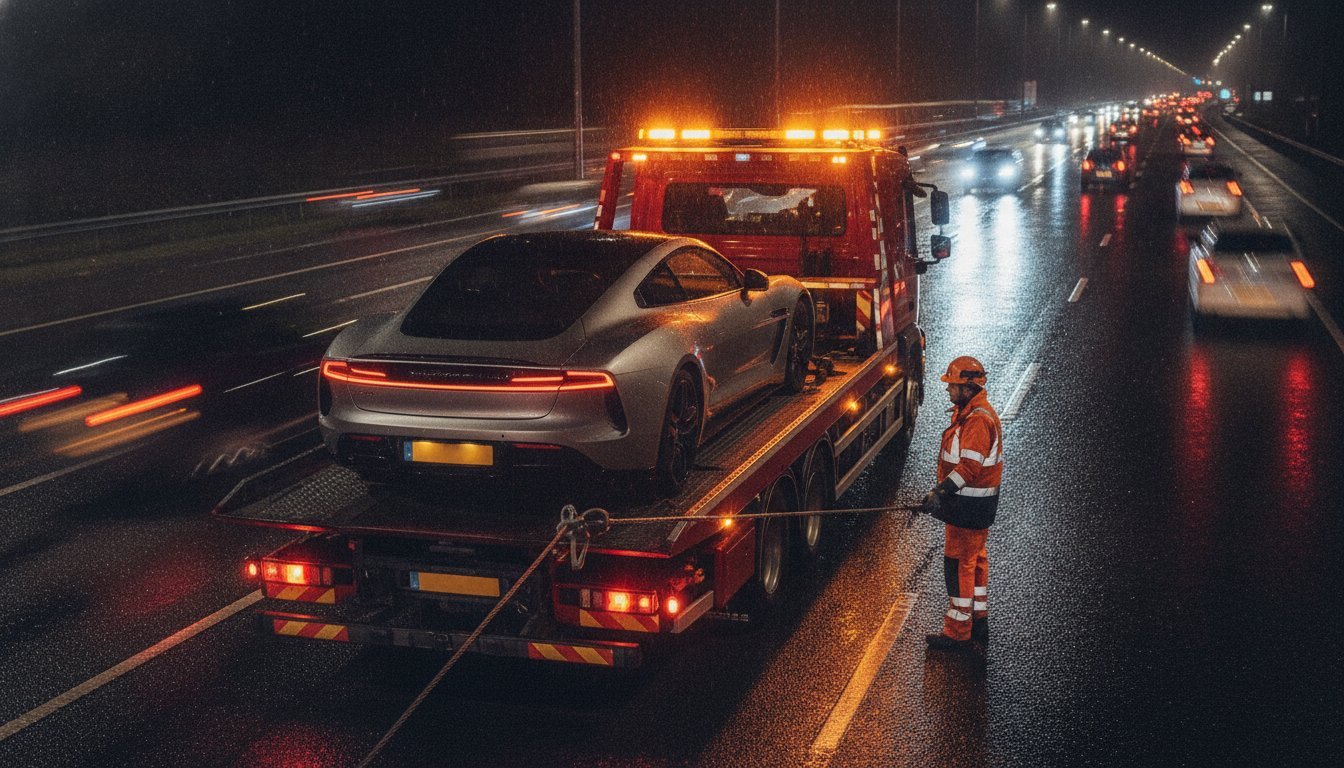
You are standing on a narrow hard shoulder as lorries thunder past, shaking your grounded vehicle with every heavy gust of wind. It is a vulnerable position that leaves any driver feeling exposed and uncertain. When you realise you need professional car towing, the immediate panic often centres on more than just the breakdown itself. Will a recovery driver arrive quickly enough to keep you safe? Is your expensive electric vehicle or heavy van going to be damaged by the wrong equipment? These are the questions that race through your mind while you wait by the roadside.
We know that a vehicle failure is more than just a mechanical hitch; it is a high-stakes disruption to your safety and your schedule. This guide helps you master the essentials of professional recovery, from emergency motorway protocols to selecting the correct transport method for your specific vehicle type. We will walk through the entire recovery process, explain exactly how to stay safe whilst you wait, and give you the confidence to choose a dependable partner who prioritises your car’s integrity. You will learn how to secure expert help without the pressure of hidden costs or the need for a monthly membership.
Key Takeaways
- Learn the critical distinction between basic car towing and professional vehicle recovery to ensure your car receives the correct level of care.
- Discover why flatbed towing is the safest method for protecting the drivetrain of electric vehicles and modern 4x4s during transport.
- Master the “Left, Light, Leave” protocol to maintain safety and visibility whilst waiting for help on busy motorways.
- Understand the specialised logistics involved in accident recovery to ensure your vehicle is handled with precision and care.
- Access immediate, 24/7 emergency support for any vehicle size without the commitment or cost of a monthly membership.
Understanding Car Towing: More Than Just a Lift to the Garage
Professional car towing is far more than a mechanical lift. It is a precision logistics operation designed to move your vehicle without causing further damage. Many drivers confuse a simple “tow” with full “recovery.” A tow typically involves moving a rolling vehicle over a short distance. Recovery, however, is the specialised transport of a non-functional vehicle that may be immobilised, off-road, or involved in an accident. Professional recovery is essential for modern cars. These vehicles are packed with sensitive sensors and complex drivetrains that can be ruined by improper handling. Using the wrong types of tow trucks often leads to expensive repair bills that far outweigh the cost of expert help.
Attempting a DIY tow with a rope is a significant risk. Modern traffic moves too fast for the slow, jerky movement of a rope-towed car. Ropes are particularly risky amongst heavy motorway traffic. Without the engine running, you lose power-assisted steering and braking. This makes controlling the vehicle nearly impossible in an emergency. It’s a dangerous shortcut that puts you and other road users at risk.
The Legalities of Towing on UK Roads
UK law is strict regarding vehicle transport. You must understand your licence categories and the Maximum Authorised Mass (MAM) limits before attempting to pull a trailer or another car. Towing an un-braked vehicle with a simple rope is often legally precarious. Under the Road Vehicles (Construction and Use) Regulations, the towed vehicle must meet specific braking standards if it exceeds certain weights. You must also ensure:
- The tow rope or bar is clearly marked with a high-visibility sign.
- A proper lighting board is attached to the rear of the towed vehicle.
- The number plate on the rear matches the towing vehicle exactly.
If you can’t meet these requirements, professional transport is your only legal option.
When is Emergency Recovery Necessary?
Mechanical failure is just one reason to call for help. Accident recovery requires a different set of skills. Professionals must clear the road, manage debris, and ensure the vehicle is structurally safe to lift. If your car has left the tarmac, winch recovery is required to pull it back safely without snapping suspension components. Electric vehicles (EVs) present another challenge. Most EV manufacturers forbid towing with the wheels on the road because it can generate heat in the motor and cause damage. These cars require a flatbed towing service for a total lift, ensuring the drivetrain remains completely stationary during transport.
Flatbeds, Winches, and Wheel-Lifts: The Science of Recovery
Professional recovery relies on physics and specialised machinery rather than brute force. Choosing the right equipment is the first step in protecting your vehicle’s mechanical integrity. Flatbed towing, often referred to as a “total lift,” is the most common method for modern car towing. By placing the entire vehicle onto a hydraulic platform, we eliminate the risk of transmission wear or tyre damage. This method is particularly vital for vehicles that cannot be easily shifted into neutral or those with electronic handbrakes that have seized. Using a flatbed ensures that your car remains stationary and secure throughout the journey.
In tight urban environments or multi-storey car parks, a wheel-lift, or “spectacle lift,” is often the more practical choice. This equipment uses a metal yoke that fits under either the front or rear wheels, lifting one axle off the ground. Whilst efficient for short distances, it requires the remaining wheels to be in good condition and the drivetrain to be compatible with a two-wheel lift. For vehicles stuck in ditches, mud, or snow, winch and recovery techniques are used to gently extract the car. This process involves calculating load weights and pull angles to ensure the vehicle is moved without snapping suspension components. High-quality operators always follow standards set by organisations like the Towing and Recovery Association of America to maintain international best practices in safety. If you find yourself in a difficult spot, you can request a professional recovery vehicle equipped with the latest winching technology.
Why Flatbed Recovery is the Gold Standard
Modern vehicle design has made flatbed towing the preferred choice for most recoveries. Automatic transmissions and permanent 4×4 systems are sensitive. Towing them with two wheels on the road can cause the internal gears to spin without proper lubrication, leading to a total gearbox failure. A flatbed keeps all four wheels off the tarmac, providing total peace of mind. This method also accommodates low-clearance sports cars or modified vehicles. Hydraulic beds can tilt to a very shallow angle, allowing the car to be winched aboard without the front splitter or underbody scraping against the ramps. It is the safest way to ensure your vehicle arrives at its destination in the same condition it was found.
Specialist Equipment for Heavy and Classic Vehicles
Not every recovery truck is built for every job. Heavy-duty recovery for HGVs and large vans requires significantly more powerful winches and reinforced chassis. These commercial vehicles have different MAM limits and require a recovery driver with specific licence categories. Classic cars also demand a unique approach. Because older vehicles often have delicate chrome bumpers and thinner bodywork, we avoid traditional hook-and-chain methods. Instead, we use soft-strap tie-downs on the wheels or specific chassis points to prevent any structural stress. Whether you are moving a vintage pride-and-joy or a heavy-duty work van, using the correct equipment is the only way to guarantee a damage-free transport.
Dealing with Complexity: Accident Recovery and Logistics
Accident scenes are high-pressure environments that require more than just a simple lift. Recovery professionals act as the steady hand during these chaotic moments. They coordinate with emergency services to clear the road quickly and safely. Damage mitigation is the absolute priority during the loading process. If a vehicle has a sheared wheel or a collapsed suspension, specialists use wheel skates or heavy-duty winches to slide the car onto a flatbed. This precision prevents secondary damage to the chassis or underbody components that often occurs with amateur handling. Every movement is calculated to preserve the vehicle’s remaining integrity.
Documenting the process is a critical part of modern car towing. High-quality operators provide a clear paper trail for insurance purposes. This includes taking detailed photographs of the vehicle at the scene and recording its condition upon arrival at the destination. This evidence is vital for your insurance claim. It ensures there is no ambiguity about when and where damage occurred. By providing this level of detail, professional recovery services help streamline the often-complex transition from the roadside to the repair shop.
The Vital Role of Secure Vehicle Storage
A vehicle cannot always go straight to a garage. If an accident happens during the night or over a weekend, most repair centres are closed. Insurance companies also often require a formal assessment before repairs can begin. Secure vehicle storage provides a necessary holding phase. Professional compounds feature 24/7 CCTV, perimeter fencing, and controlled access to protect your asset from theft or weather damage. It is a separate service from the initial recovery that gives you the breathing room to organise your next steps whilst your vehicle remains in a safe, monitored environment.
Scheduled Vehicle Logistics and Transport
Recovery isn’t always born of a crisis. Many logistical needs are planned in advance to simplify the movement of high-value assets. This includes auction collection for newly purchased cars or specialised van recovery for fleet vehicles. Professional transport is also a popular choice for MOT pickup and drop-off services. If you have a busy schedule, a recovery driver can collect your vehicle and return it once the test is complete. This type of scheduled logistics preserves the mileage of classic cars and ensures that modified or luxury vehicles are moved with the highest level of care, far beyond what a standard trailer could provide.
Preparing for the Recovery Driver: A Step-by-Step Safety Protocol
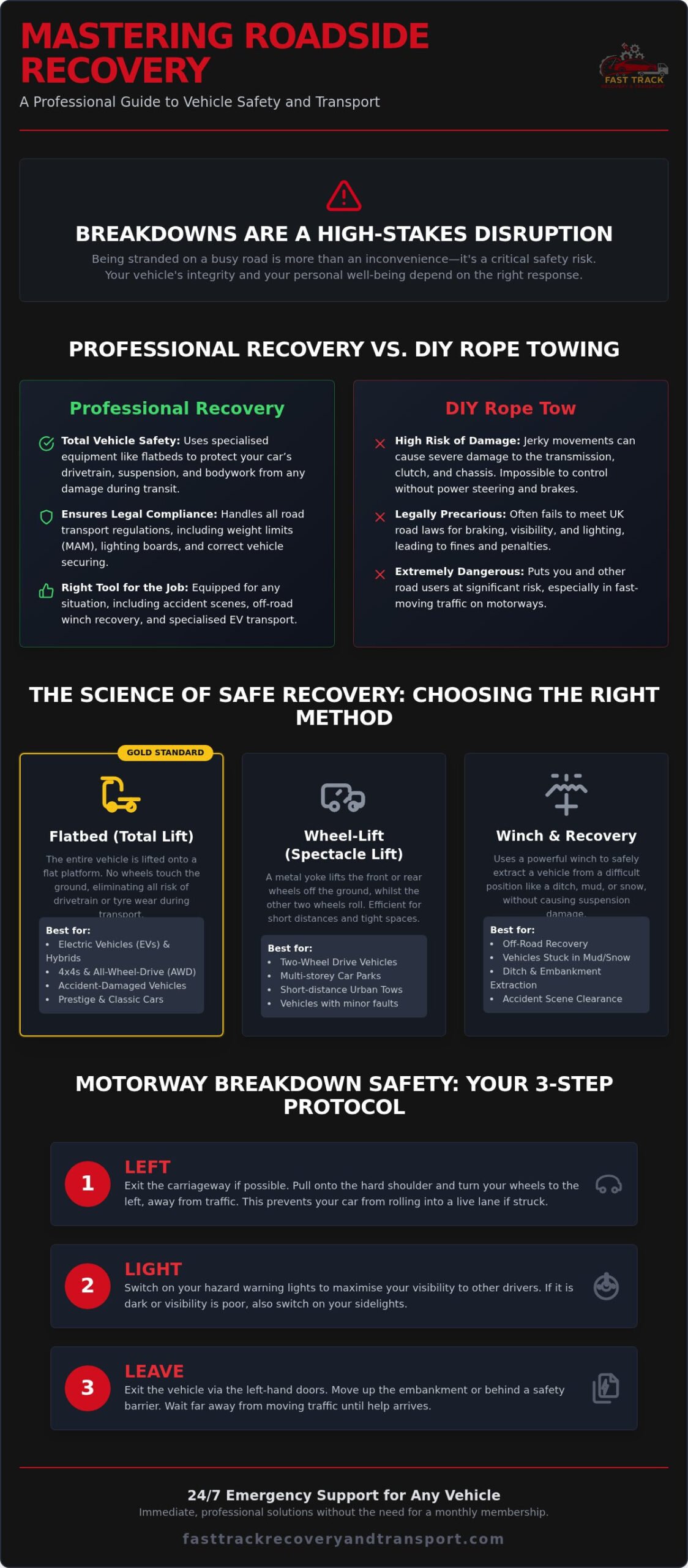
Safety is your absolute priority when a vehicle fails. Before you even call for car towing, you must secure your position. If the vehicle is still rolling, steer it towards the hard shoulder or a safe lay-by immediately. Switch on your hazard lights to alert other road users of your presence. Following the “Left, Light, Leave” protocol is the industry standard for breakdowns. Move the vehicle as far left as possible. Keep your sidelights and hazards on to maintain visibility. Then, leave the vehicle. Waiting inside a stationary car on a busy road is extremely dangerous. Modern traffic moves at high speeds; a rear-end collision with a stationary vehicle can be fatal. Stay alert and stay away from the road surface.
Safety on the Motorway and Dual Carriageways
On high-speed roads, you must exit the vehicle through the passenger doors. This simple action keeps you away from live traffic lanes. Once out, move up the embankment or stand well behind the crash barrier. You should never attempt “DIY” repairs like changing a tyre or checking the engine whilst on a motorway. The speed of passing lorries creates a draft that can easily pull a person off balance. If you have pets with you, keep them inside the vehicle. A frightened animal running into traffic creates a secondary emergency that endangers everyone on the road. Stand upstream of the traffic so you can see oncoming vehicles clearly whilst you wait for professional assistance.
What to Tell Your Recovery Dispatcher
Clear communication ensures the right equipment reaches you quickly. Provide your exact location using marker posts or digital tools like “what3words.” This is significantly more accurate than vague descriptions of local landmarks. You must also specify your vehicle type. If you have an electric vehicle, a heavy van, or a car with locked steering, the dispatcher needs to know. This information determines whether they send a standard van or a flatbed for a total lift. Describe your surroundings accurately. Are you stuck in soft mud, a ditch, or a narrow lane? Being specific prevents the driver from arriving with the wrong gear, which could delay your recovery by hours. Accurate details lead to a faster, safer resolution.
If you are currently stranded and need immediate assistance, you can book an emergency recovery vehicle now for a rapid response. Our dispatchers are trained to handle high-stress situations and will guide you through the safety steps whilst our driver is en route. Remember to keep your mobile phone line free so the driver can contact you directly for final arrival instructions. Your safety is our primary concern from the moment you call until your vehicle is safely off the road.
Fast Track Recovery: Professional Solutions Without the Subscription
Many drivers believe that breakdown cover is a mandatory requirement for road safety. They pay monthly fees for years, often without ever needing a call-out. Fast Track Recovery & Transport provides a different path. We are the immediate answer for those who find themselves stranded without a membership. If you need car recovery without breakdown cover, you don’t have to join an expensive club or wait hours for a generalist service. Why pay for a service you don’t use? We operate with a no-nonsense professional ethos, focusing on rapid response times and technical proficiency. Our team understands that when you need car towing, you need it now. Fast Track Recovery & Transport is available 24/7 to handle everything from a simple jump-start to complex HGV recovery. You aren’t just another number in a database; you’re a driver in need of an expert solution.
Why Choose Pay-Per-Use Recovery?
A pay-per-use model is often more cost-effective for drivers who stay local or travel infrequently. It eliminates the wasted expense of annual subscriptions whilst providing the same level of emergency security. We provide instant quotes for one-off transport jobs, ensuring you know the cost before the truck arrives. This transparency removes the fear of hidden fees during a crisis. Independent experts often provide a higher level of specialist care compared to large-scale generalist clubs. Because we handle our own logistics, we can prioritise your specific vehicle type, whether it’s a delicate classic car or a modern EV requiring a total lift.
Our Comprehensive National Service Range
Our fleet is equipped for more than just emergency breakdowns. We provide a full spectrum of vehicle movement solutions across the UK. Our core services include:
- Accident Recovery: Professional clearance and damage mitigation at the scene.
- Fuel Delivery and Jump-starts: Rapid roadside assistance to get you moving again.
- Specialist Transport: Secure logistics for auction collections, classic cars, and high-value assets.
- MOT Logistics: Convenient pickup and drop-off services to fit your schedule.
- Heavy Recovery: Dedicated equipment for van recovery and HGVs.
We take charge of the situation so you don’t have to. Whether you’re stuck in a ditch or need a vehicle moved for an MOT, our team arrives with the right tools for the job. Get an instant quote for professional car towing today and experience a recovery service built on reliability and speed.
Secure Your Vehicle with Professional Recovery
Navigating a vehicle breakdown is stressful, but understanding the logistics of car towing puts you back in control. You now know that professional recovery is a precision operation. It protects your vehicle’s complex sensors and drivetrain from unnecessary wear. By following the “Left, Light, Leave” protocol, you ensure your personal safety whilst waiting for expert assistance. Whether you drive a modern electric vehicle or a heavy-duty work van, the right equipment matters. Using the correct recovery method is the only way to prevent secondary damage.
You don’t need to be tied to an expensive annual subscription to receive high-quality care. Professional help is available exactly when you need it. We offer a 24/7 rapid response with specialist HGV and EV equipment to get you off the road safely. No membership is required to access our fleet. Our no-nonsense approach ensures an honest, efficient service every time. We are ready to help.
If you are currently stranded or need to arrange a vehicle move, take the next step now. Contact Fast Track Recovery for 24/7 Emergency Towing and let our team handle the logistics. Stay safe and stay visible. We are here to get you moving again.
Frequently Asked Questions
Can I get my car towed if I do not have a breakdown membership?
Yes, you can access professional car towing without any monthly membership or annual subscription. Fast Track Recovery & Transport provides a pay-as-you-go service for drivers who need immediate assistance. This is often more cost-effective for those who don’t travel frequently. You simply request an instant quote and pay for the specific recovery you need. This ensures you aren’t paying for a service you never use whilst still having 24/7 access to emergency help. Drivers seeking car recovery without breakdown cover can get an instant quote and have a professional driver dispatched without any prior membership or registration.
How much does car recovery typically cost per mile in the UK?
UK recovery costs are typically calculated based on a base call-out fee plus a per-mile rate. The final price depends on the vehicle type, the complexity of the recovery, and the distance to your destination. Specialist tasks like winching or recovering a heavy van may incur different rates. We provide transparent, instant quotes so you know the exact cost before the recovery driver is dispatched, avoiding any hidden fees during a high-stress emergency.
Is it safe to tow an electric vehicle with a traditional tow truck?
No, traditional two-wheel towing is generally unsafe for electric vehicles. Most EV manufacturers specify that the car must be transported on a flatbed with all four wheels off the ground. Towing an EV with its wheels on the road can generate heat in the electric motor and cause permanent damage to the battery or drivetrain. Always specify that you have an EV when calling for assistance to ensure we send a vehicle equipped for a total lift.
How long will I have to wait for a recovery driver to arrive?
Wait times vary depending on your location, traffic conditions, and current demand. However, we prioritise rapid response times to ensure you aren’t left in a vulnerable position for long. Our dispatchers use GPS tracking to send the nearest available driver to your exact location. Once you provide your details, we will give you an estimated time of arrival and keep you updated throughout the wait to provide peace of mind.
Can a recovery service tow my car from a motorway hard shoulder?
Yes, professional recovery services are fully equipped to recover vehicles from motorway hard shoulders and lay-bys. When you call, provide your exact location using motorway marker posts or digital tools. Our drivers follow strict safety protocols to protect you and your vehicle whilst loading in high-speed traffic. Remember to follow the “Left, Light, Leave” rule; stay behind the crash barrier and away from the road surface until the recovery vehicle arrives.
What happens to my car after it has been recovered from an accident?
After an accident, your vehicle is transported either to a repair centre of your choice or to secure vehicle storage. If the accident occurs out of hours or before an insurance assessment is complete, storage is often the safest option. Our storage compounds are monitored 24/7 to protect your asset. We also provide documented transport records to support your insurance claim, ensuring a clear paper trail from the accident scene to the final destination.
Do I need to stay with my vehicle whilst waiting for the recovery driver?
Your safety is the priority. On a motorway, you should stay behind the crash barrier near your vehicle but never inside it. For local road recoveries, staying with the car allows you to hand over keys and confirm the destination with the driver. However, if you feel unsafe or are in a dangerous position, move to a secure location and inform the dispatcher. We can often arrange a key handover if you cannot remain on-site due to safety concerns.
Can you recover larger vehicles like vans or HGVs?
Yes, our fleet is capable of handling much more than standard car towing. We provide specialist van recovery and HGV recovery for commercial operators across the UK. These larger vehicles require heavy-duty winches and reinforced flatbeds designed for higher weight limits. Whether you are a sole trader with a single van or manage a larger fleet, we have the technical proficiency and equipment to recover your commercial vehicle and its cargo safely and efficiently.
One Comment
[…] secure a car whilst traffic passes at high speeds is highly specialised. Choosing a provider with professional car towing expertise ensures that these safety protocols are strictly followed. This protects both your […]